

What Is Continuous Compliance and How Is It Relevant in 2026? | Complete Guide
Regulatory expectations are no longer slow-moving or predictable. Compliance today operates in an environment where rules evolve quickly, enforcement is continuous, and accountability sits firmly with leadership teams.
Traditional GRC models built around periodic audits and manual tracking are struggling to keep pace.
This shift has pushed organizations toward a new operating model. So, what is continuous compliance and how is it relevant today? It represents a move from reactive checklists to always-on oversight, where controls, risks, and obligations are monitored in real time.
This guide explains how continuous compliance works and why it has become essential for building resilient, audit-ready organizations.
Key Takeaways
- Always-On Audit Readiness: Shift from the “audit scramble” to a state where evidence is collected automatically as work is performed.
- Proactive Risk Remediation: Identify control drifts and policy violations the moment they happen, reducing the “dwell time” of non-compliance.
- Algorithmic Accountability: Meet the strict 2026 transparency requirements for AI systems by embedding governance into the model lifecycle.
- Cost Predictability: Reduce compliance-related expenses by up to 40% while avoiding record-breaking fines for non-compliance.
- Unified Control Frameworks: Use “map once, comply many” strategies to satisfy dozens of global regulations through a single automated workflow.
How Does Continuous Compliance Work?

Continuous compliance functions as a living pulse within your organization’s digital infrastructure. It works by integrating your governance requirements directly into your daily operations using APIs, automated tests, and real-time alerts.
Rather than waiting for an auditor to manually check a control, the system monitors your cloud environment, HR software, and financial tools every second, ensuring that your organization never drifts into a state of non-compliance.
1. Framework Ingestion: The process begins by mapping global regulations (like SOC 2, ISO 27001, or GDPR) to specific internal controls.
2. Automated Control Testing: The platform runs scripts and checks across your tech stack, such as verifying that MFA is enabled or that database encryption is active.
3. Real-Time Evidence Capture: When a control passes, the system automatically captures a timestamped log or screenshot as proof.
4. Instantaneous Alerting: If a control fails (e.g., an unauthorized person gains access to sensitive data), the system triggers an immediate remediation task for the owner.
5. Dynamic Dashboarding: All data is aggregated into a live “Compliance Score,” providing leadership with a real-time view of the organization’s health.
Also read: Compliance Audits: A Guide to Ensuring Regulatory Adherence
Why Periodic Audits are Obsolete in 2026
The traditional audit model was built for a slower, analog world. In 2026, the gap between audits has become a “black hole” of risk where a single configuration change or employee error can lead to a multi-million dollar disaster before the next scheduled review.
- The Speed of Digital Change: Modern organizations deploy code dozens of times a day. An annual audit only captures a single moment, missing 99% of the operational lifecycle where failures actually occur.
- The “Sampling” Fallacy: Traditional audits rely on sampling a tiny percentage of records. Continuous compliance monitors 100% of transactions, ensuring that no outlier or edge-case violation goes undetected.
- Resource Drain: Manual audits “freeze” productivity, requiring hundreds of hours from IT and security teams. Continuous oversight automates these tasks, returning time to the business.
By eliminating the blind spots inherent in periodic reviews, organizations can transition from a defensive “check-the-box” mentality to a state of strategic resilience.
Core Pillars of a Continuous Compliance Framework
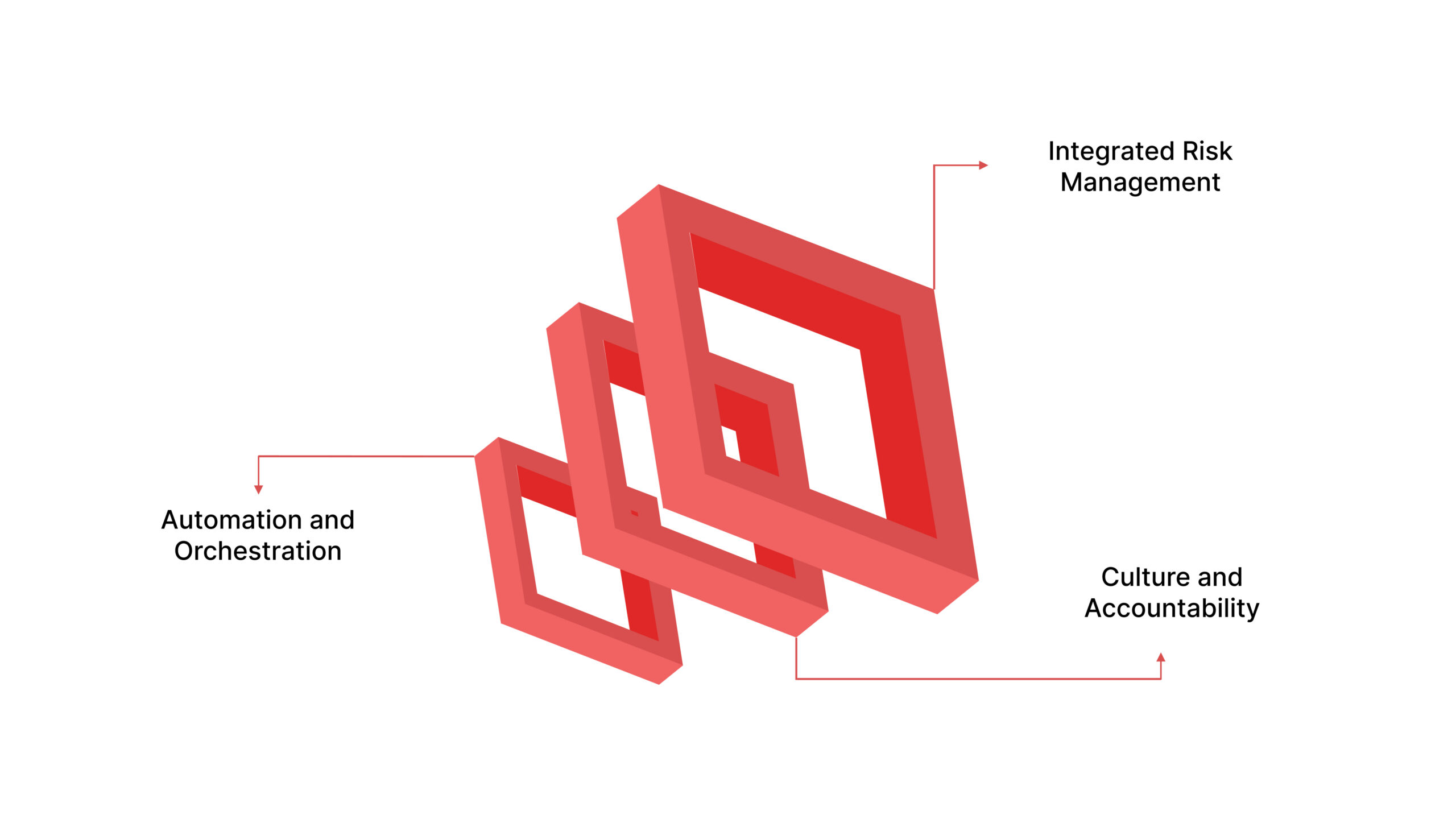
Implementing a continuous model requires more than just software; it requires a architectural shift in your GRC strategy. To truly understand what is continuous compliance and how is it relevant in 2026, one must look at the three foundational pillars that support the entire ecosystem.
1. Automation and Orchestration
In 2026, automation is the engine of compliance. This involves using ComplianceOps to automate evidence collection across hybrid and multi-cloud environments. By orchestrating workflows, you ensure that tasks like access reviews, policy updates, and vendor assessments happen on a set cadence without manual intervention.
2. Integrated Risk Management
Compliance cannot exist in a vacuum. It must be tied to a live risk register. RiskOps allows organizations to see how a failed compliance control directly impacts their “Residual Risk” score. This integration ensures that teams prioritize remediation based on business impact rather than just regulatory checkboxes.
3. Culture and Accountability
Continuous compliance is as much a people-problem as it is a tech-problem. It requires embedding compliance logic into the tools employees use daily like Slack, Jira, or Microsoft Teams.
By using PolicyOps to manage the distribution and attestation of rules, you create a culture of “Compliance by Design” where every team member understands their role in the safety of the enterprise.
Also Read: Understanding Policy Definition and the Difference Between Procedures and Guidelines
These pillars provide the structure, but the real urgency behind continuous compliance comes from the massive shifts in the global regulatory landscape this year.
Navigating the 2026 Regulatory Landscape: EU AI Act, NIS2, and Beyond
As of August 2, 2026, the EU AI Act has reached its most critical milestone: full compliance for high-risk AI systems is now mandatory. This regulation, along with several others, has fundamentally changed the requirements for GRC.
- Algorithmic Transparency: For the first time, organizations must provide technical documentation and human oversight for their AI models. Continuous monitoring is the only way to track “Model Drift” and ensure that AI decisions remain fair and unbiased over time.
- Personal Executive Liability: Under NIS2, senior management can now be held personally liable for gross negligence in risk management. This has moved compliance from the server room to the boardroom, making real-time visibility a necessity for legal protection.
- Operational Resilience (DORA): In the financial sector, DORA mandates that firms demonstrate their ability to withstand, respond to, and recover from ICT disruptions. Annual audits cannot prove resilience; only continuous testing and incident management tracked through tools like CaseOps can satisfy these demands.
The legal risks are high, but the financial consequences of remaining in a manual, periodic compliance state are even more staggering in the 2026 economy.
The Financial Impact: Why Continuous Compliance is a Profitable Investment
In 2026, the “cost of doing nothing” has reached an all-time high. Data from recent industry reports indicates that organizations that rely on manual compliance spend significantly more on remediating breaches than those with automated oversight.
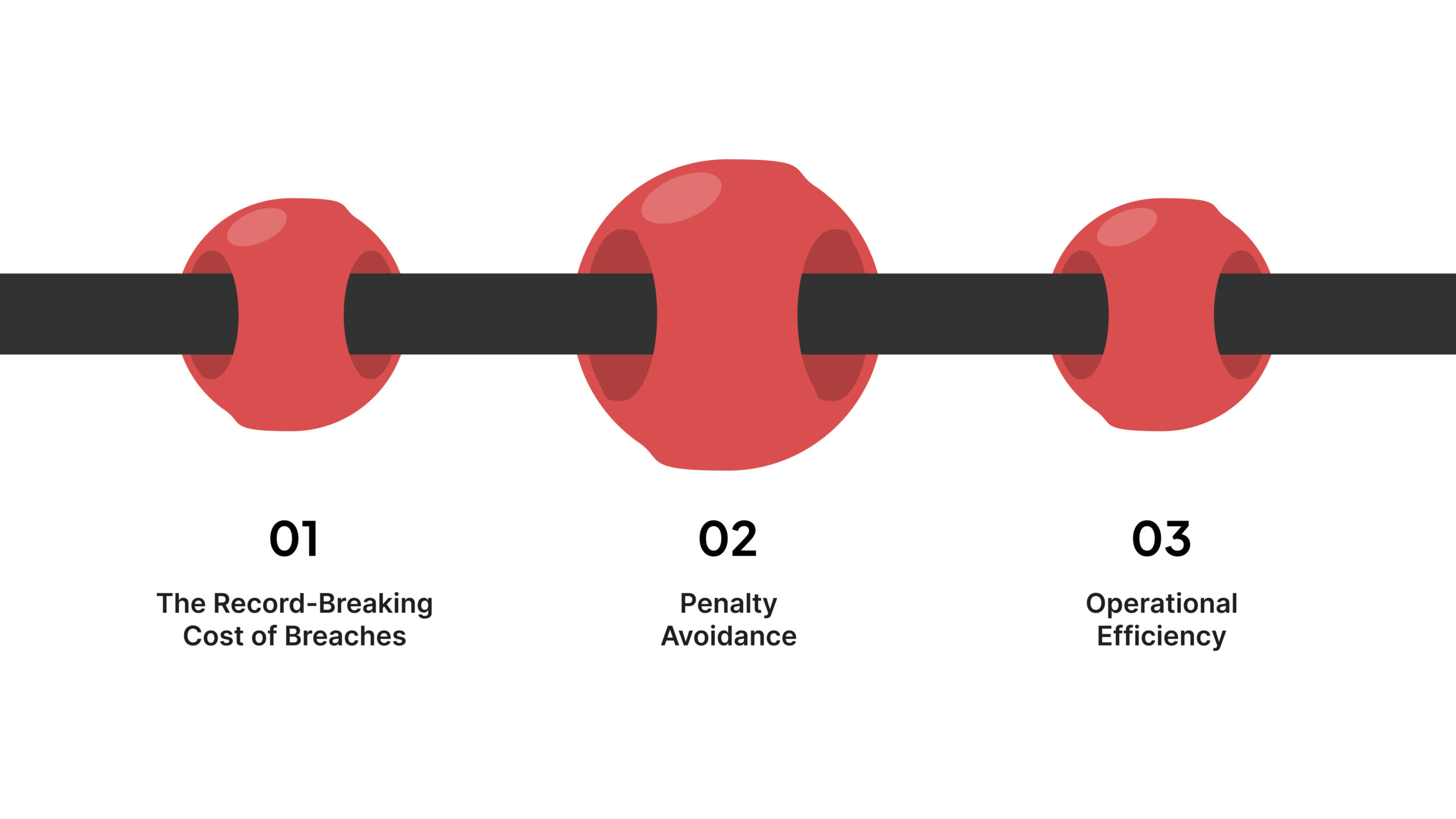
- The Record-Breaking Cost of Breaches: In early 2026, the global average cost of a data breach hit $4.88 million. However, breaches involving organizations with low compliance maturity cost nearly $2 million more than those with highly automated, continuous monitoring.
- Penalty Avoidance: Non-compliance is roughly three times more expensive than the cost of maintaining a robust GRC program. Major fines under GDPR and NIS2 now routinely reach up to 4% of global turnover, making “prevention via automation” a clear financial win.
- Operational Efficiency: Continuous compliance reduces the “administrative tax” on your most expensive employees. Instead of engineers spending 20% of their time on audit prep, they can focus 100% on product innovation, while ComplianceOps handles the documentation in the background.
While the ROI is clear, many organizations still struggle to understand how continuous compliance practically differs from the audit methods they have used for decades.
Continuous Compliance vs. Traditional Audits: A Comparative Analysis
Understanding what is continuous compliance and how is it relevant in 2026 requires a direct comparison of how these two approaches handle the realities of modern business.
| Feature | Traditional Periodic Audit | Continuous Compliance Monitoring |
| Frequency | Annual or Bi-annual “Snapshots” | 24/7/365 Real-time Oversight |
| Scope | Limited “Sampling” of data | 100% Comprehensive Coverage |
| Visibility | Reactive (looking at the past) | Proactive (detecting live drift) |
| Effort | High-intensity “Audit Scramble” | Integrated into daily workflows |
| Evidence | Manual, scattered, and prone to loss | Automated, centralized, and immutable |
| Risk Posture | Theoretical (on paper) | Operational (in practice) |
The transition to a continuous model is not just a change in schedule; it is a change in the organization’s fundamental “system of record” for trust.
Key Benefits of Continuous Compliance in 2026
The shift to continuous oversight provides a suite of advantages that touch every corner of the enterprise, from the IT helpdesk to the Chief Financial Officer.
1. Zero-Friction Audit Preparation
When you maintain continuous oversight, an audit is no longer a “project.” It is simply a report generation task. Because your evidence is tagged, timestamped, and mapped to frameworks in real-time, you can provide internal and external auditors with a “read-only” view of your compliance status at any moment.
2. Drastic Reduction in “Mean Time to Detect” (MTTD)
The 2026 Cost of a Data Breach Report shows that human-driven risks (like misconfigured cloud buckets) take the longest to identify. Continuous monitoring eliminates this delay, alerting your security team the second a configuration drifts from its compliant state.
3. “Build Once, Comply Many” Framework Efficiency
Modern businesses must answer to dozens of standards. Continuous compliance platforms allow you to map one control (e.g., “Data Encryption at Rest”) to multiple regulations (SOC 2, ISO, HIPAA, PCI DSS). If that control is verified once by an automated test, it satisfies all the relevant requirements simultaneously, saving thousands of hours of redundant work.
4. Enhanced Board and Executive Confidence
In the age of personal liability, the C-suite needs more than just a “gut feeling” that things are okay. Continuous compliance provides a “Compliance Score”, a data-driven KPI that boards can use to make informed decisions about cyber insurance, investments, and mergers.
Achieving these benefits requires a platform designed specifically for the speed and scale of 2026’s regulatory demands.
Empowering Continuous Compliance with VComply
Moving from legacy spreadsheets to an automated GRC ecosystem is a strategic journey that requires the right infrastructure. VComply is a leading cloud-based GRC management platform built to turn compliance from a static obligation into a continuous, operational advantage.
Our suite of GRCOps solutions is designed to bridge the execution gap, ensuring that your governance intent always matches your operational reality. In 2026, VComply serves as the “single source of truth” for organizations looking to master the complexities of global regulation.
Master Every Aspect of Your GRC Strategy:
- ComplianceOps: Automate the entire compliance lifecycle. From multi-framework mapping to automated evidence collection, stay in a state of constant audit readiness for SOC 2, ISO 27001, HIPAA, and the EU AI Act.
- RiskOps: Transform your risk management from a yearly assessment to a live, dynamic register. Identify, assess, and mitigate risks in real-time with visual heatmaps and AI-driven scoring.
- PolicyOps: Streamline policy creation, distribution, and attestation. Use PolicyOps to ensure that every employee and third-party vendor is aligned with your latest security and ethics standards.
- CaseOps: Manage incidents, whistleblower reports, and regulatory breaches with full traceability. CaseOps ensures that every issue is tracked from detection to remediation, providing a defensible audit trail.
Experience the future of GRC with a platform that prioritizes clarity, automation, and accountability. Protect your business, empower your teams, and lead your industry in 2026.
Schedule a Personalized Demo to see our GRCOps suite in action.
Conclusion
The question for business leaders in 2026 is no longer if they should move to a continuous model, but how fast they can get there.
As we have explored in this guide to what is continuous compliance and how is it relevant in 2026, the combination of AI regulation, executive liability, and record-breaking breach costs has made manual compliance a high-stakes gamble.
Continuous compliance is the ultimate insurance policy for the digital age. It provides the visibility needed to prevent lapses, the automation needed to scale, and the transparency needed to build trust with customers and regulators alike.
By operationalizing your GRC program, you don’t just survive the audit; you build an organization that is inherently resilient, ethical, and prepared for whatever regulatory shifts the next decade may bring.
FAQs: Mastering Continuous Compliance in 2026
Regular compliance is episodic; it focuses on passing an audit at a specific point in time. Continuous compliance is a persistent process that monitors your controls and policies 24/7. It moves the focus from “checking the box” for an auditor to ensuring that your organization is actually secure and compliant every single day.
The EU AI Act requires organizations to maintain up-to-date technical documentation and monitor high-risk AI systems for “drift” or bias throughout their entire lifecycle. Continuous compliance platforms automate the collection of this documentation and provide the transparency logs required to prove that your algorithms are performing ethically and legally.
No. It actually empowers your internal audit team. Instead of spending 80% of their time on manual data collection and spreadsheet reconciliation, they can focus on high-level risk analysis, strategic advisory, and identifying complex gaps that automation might miss. It shifts them from “data hunters” to “strategic advisors.”
While there is an initial cost for the software, the ROI is typically seen within the first year. By automating evidence collection, a small compliance team (or even a single manager) can manage a program that would normally require a large department. It also prevents the catastrophic costs associated with non-compliance fines, which are significantly higher for SMBs relative to their revenue.
Yes. One of the core features of a modern GRC platform is its ability to connect to your existing tech stack via APIs. VComply integrates with your infrastructure to pull data automatically, send task reminders to where your employees already work, and create a seamless flow of information between your operations and your compliance records.